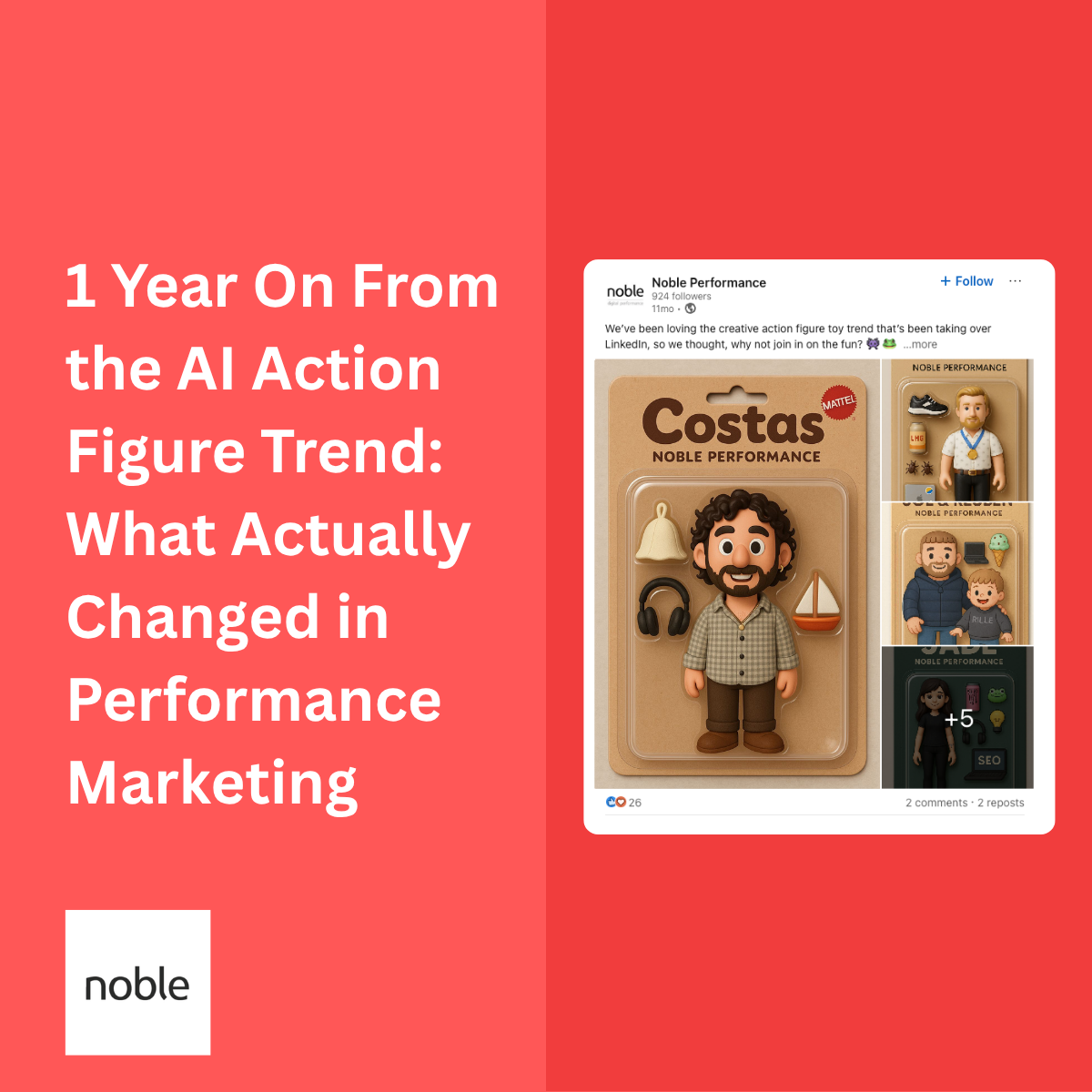
Almost a year ago, LinkedIn feeds were filled with AI-generated action figures.
Marketers, founders, and operators all packaged themselves into polished “starter kits.” It was creative and for a moment, it captured the industry’s attention and let’s be honest, we all had a great time getting involved.
The AI action figure trend was a perfect symbol of where the industry was at the time, experimenting with AI on the surface, without yet changing how performance systems actually worked.
While AI has influenced every corner of marketing over the last year, we’re spotlighting paid media, because it’s where the shift from experimentation to operational reality has been particularly visible.
So, with paid media as the focus, the question becomes: what actually changed over the last 12 months?
From experimentation to operational reality
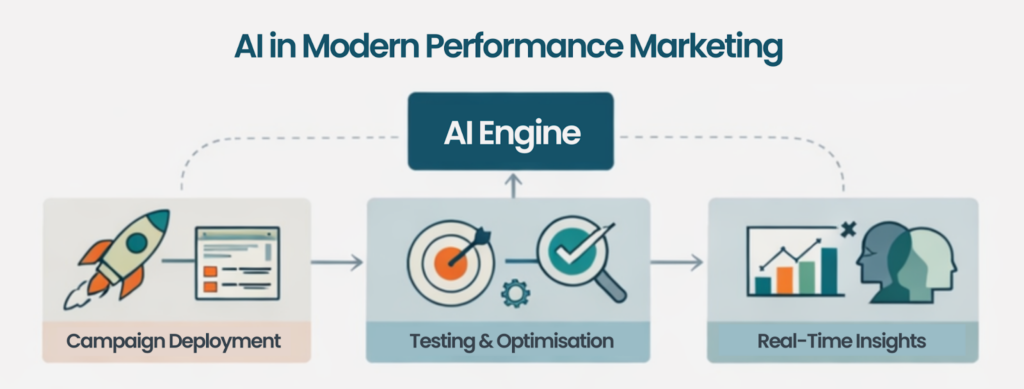
Over the last 12 months, AI has moved from the edges of marketing into the core of how performance is delivered.
What began as lightweight experimentation, content generation, quick-turn creative and social-first use cases has evolved into something far more structural. Today, the real work is happening behind the scenes in the systems, workflows, and decision‑making that actually drive performance.
The toy‑box trend was all about presentation.
Paid media transformation is about operation.
- Campaign build and deployment
- Testing and optimisation cycles
- Performance analysis and forecasting
What has materially changed
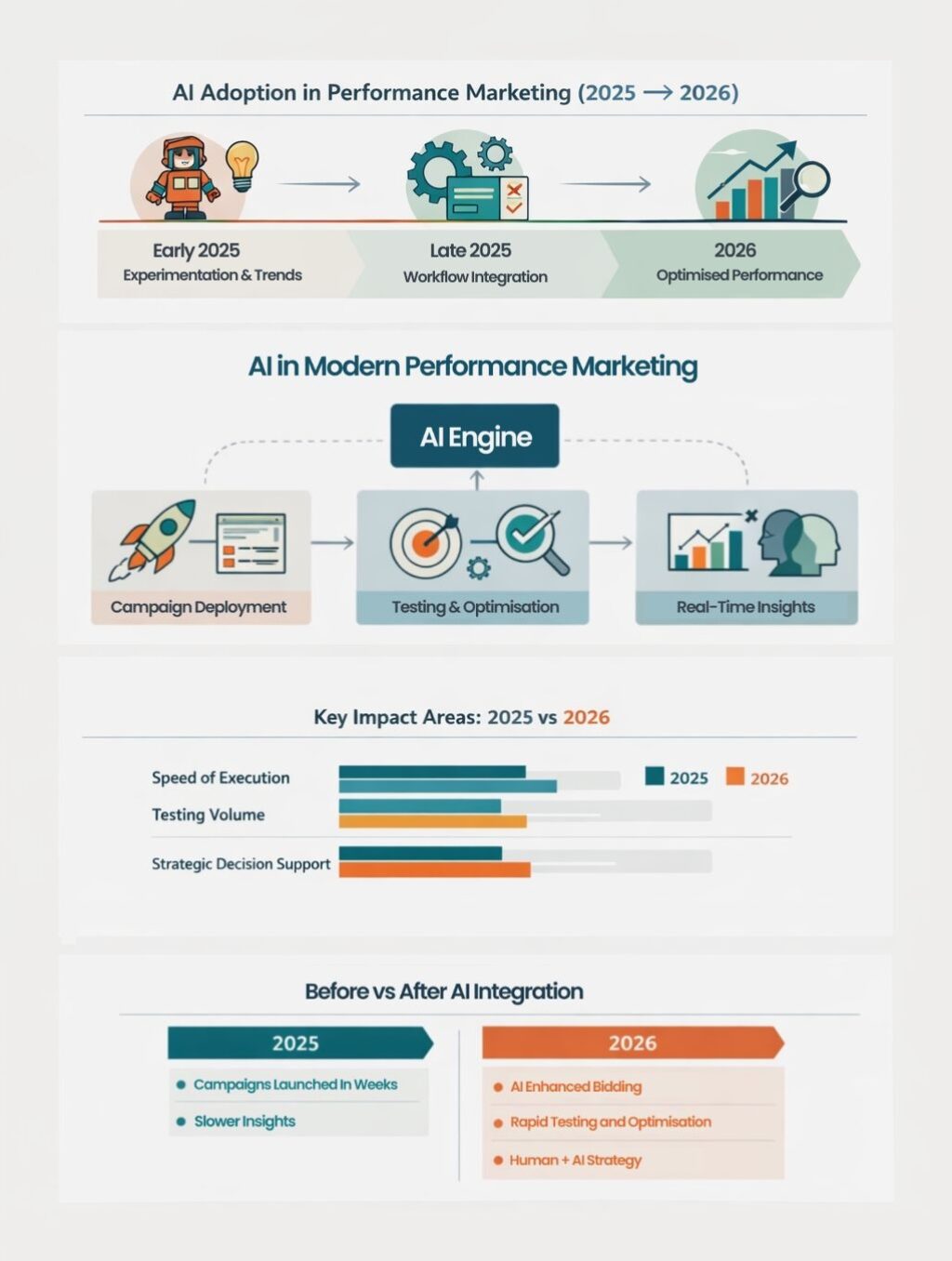
1. Speed has become a defining advantage
Execution timelines have compressed significantly.
Campaigns that previously required weeks to launch can now go live in days, and more importantly, be iterated on continuously.
This shift is less about efficiency and more about responsiveness.
The ability to test, learn, and adapt quickly is now a core driver of performance.
2. The centre of gravity has shifted from setup to optimisation
Platforms have become significantly better at handling:
- Bidding
- Targeting
- Delivery optimisation
Which means the role of the operator has changed.
Less time is spent on manual setup.
More time is spent on:
- Interpreting signals
- Guiding algorithms
- Making informed optimisation decisions
AI supports this shift, but it doesn’t replace the need for expertise.
3. Volume of testing has increased, but structure is the differentiator
AI has made it easier to:
- Launch more campaigns
- Test more variables
- Iterate more frequently
But increased activity doesn’t automatically lead to better outcomes.
The differentiator is structure:
- Clear testing hypotheses
- Defined success metrics
- Consistent feedback loops
Without that, more testing simply creates more noise.
4. The maturity gap is widening
AI adoption is now widespread.
Effective implementation is not.
We’re seeing a clear divide between:
- Teams integrating AI into performance systems
- Teams using it tactically, without a clear framework
Common issues include:
- Over-reliance on automation without oversight
- Misinterpretation of platform data
- Lack of a cohesive testing strategy
The result is predictable:
Performance plateaus, or declines.
Where expectations didn’t match reality
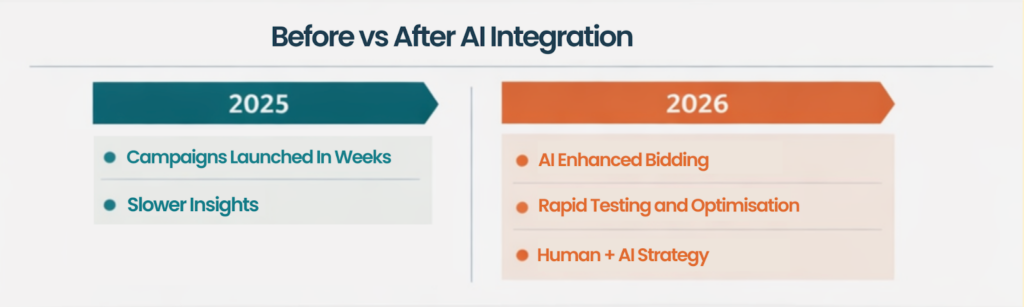
Over the past year, several assumptions haven’t held up:
- Fully automated, “hands-off” performance marketing is still limited
- AI does not remove the need for strategic oversight
- Tools alone do not create advantage
In practice:
AI enhances execution, it doesn’t replace disciplined performance marketing.
What comes next
Looking ahead, a few trends are becoming clear:
1. Decision-making becomes the key differentiator
As execution becomes more automated, performance will be driven by the quality of decisions, not the volume of activity.
2. Signals and data interpretation matter more
Understanding what the platforms are doing and why becomes critical to guiding performance.
3. Performance teams evolve into system operators
The role shifts toward:
- Designing robust testing frameworks
- Managing inputs into automated systems
- Continuously refining based on real performance data
A broader perspective
If the AI action figure trend represented a moment of curiosity
Then the last 12 months have been about integration.
And what comes next will be defined by control and precision.
Our approach
At Noble Performance, our focus has been clear:
Not adopting AI for its own sake, but applying it where it improves performance outcomes.
That means:
- Integrating AI into campaign workflows
- Structuring testing to maximise learning
- Using AI to support faster, better-informed decisions
We don’t see AI as a replacement for performance marketing fundamentals.
We see it as a way to execute them more effectively and at scale.